

5 Everyday Moments You Can Turn Into Speech and Language Practice

Transforming Daily Activities Into Engaging Speech and Language Practice

As a parent, you feel like your plate is already full.... But, you don’t need special toys, flashcards, or apps to help your child develop their speech and language skills! The most powerful opportunities for speech and language development happen during the activities you are doing every day. Let’s talk about 5 different opportunities throughout your day that you can turn into fun, meaningful moments that support communication, all without adding extra pressure.
1. Making a Meal
How can we make meal time fun and functional? Mealtimes are packed with routines, vocabulary, choices, emotions, and sensory experiences. All of these are perfect ingredients for building vocabulary, requesting, turn-taking, following directions, answering questions, or using speech sounds.
Building Language Skills into Mealtime
For Toddlers:
Simply naming items and actions to expose your child to a variety of new vocabulary
You have the spoon! We use the spoon to stir, stir, stir.
Offering choices to encourage use of language and gestures
Do you want strawberries or blueberries?
Practice verbs - talk about what your child is doing
You are stirring the sauce. Now, you are pouring in the milk. Let’s eat it!
Talk about your senses - how does the food smell, look, taste, feel
The soup is hot. This tastes yummy! The sugar is sweet.
Create communication temptations - give your child the chance to tell you what they want
Hand them a container you know they can’t open / “forget” to put milk in their cup
For Older Children:
Have your child use a recipe to find all of the needed ingredients
Look at this recipe, what spices do we need?
Give your child multi-step directions
Pour in the milk then add 2 eggs
Talk about “how” and “why”
How do you think we could change this recipe to feed more people?
Challenge your child to use descriptive language
Can you describe a food without naming it and I’ll try to guess what you’re describing
Building Speech Sounds into Mealtime
Brainstorm words with your child’s target speech sound
Examples:
/k/: cook, count, cut, cookie, cabbage, cup, corn
/g/: good, get, gallon, garbage, garlic, go, garden
/s/: salt, see, say, sandwich, salad, soap, soup, side, six, sink
/f/: food, fun, feast, fish, find, family, fork, four, five, fire
/r/: read, rice, reach, red, roast, rag, radish, rip, round

Bedtime Routine
Bedtime isn’t just for winding down—it’s also one of the best times to support your child’s speech and language development. With just a few small tweaks, your existing bedtime routine can naturally support your child’s communication skills in a comforting, low-pressure way.
Building Language Skills into Bedtime
For Toddlers:
Narrate your routine
Brush, brush, brush your teeth! Wash, wash, wash your hair!
Offer choices
Do you want the blue pajamas or the red ones?
Use predictable, repetitive phrases
This is the way we wash our...hair! This is the way we brush our...teeth!
Read books together: Choose books with repetitive lines, leave out the last word and see if they will fill it in with a word or gesture
Brown bear, brown bear what do you see? I see a red bird looking at.... ME!
Create communication temptations: give them the opportunity to communicate
Put them in the bath with no water... look at them expectantly... see what they say or do
For Older Children
Reflect on their day with open-ended questions
What was something you did well today?
Build vocabulary through emotions
How did you feel when that happened today?
Ask them to summarize their day
What happened first, next, last?
Read or listen to books together
Talk about the characters, make predictions, summarize the chapter
Building Speech Sounds into Bedtime
Brainstorm words with your child’s target speech sound
Examples:
/k/: cup, kiss, count, call, come, comb
/g/: go, goodnight, get, give, girl
/f/: feel, fan, fall, family, first, feet, face
/s/: sing, sip, see, soap, say, silly
/l/: laugh, lullaby, love, look, laundry
Playing Outside
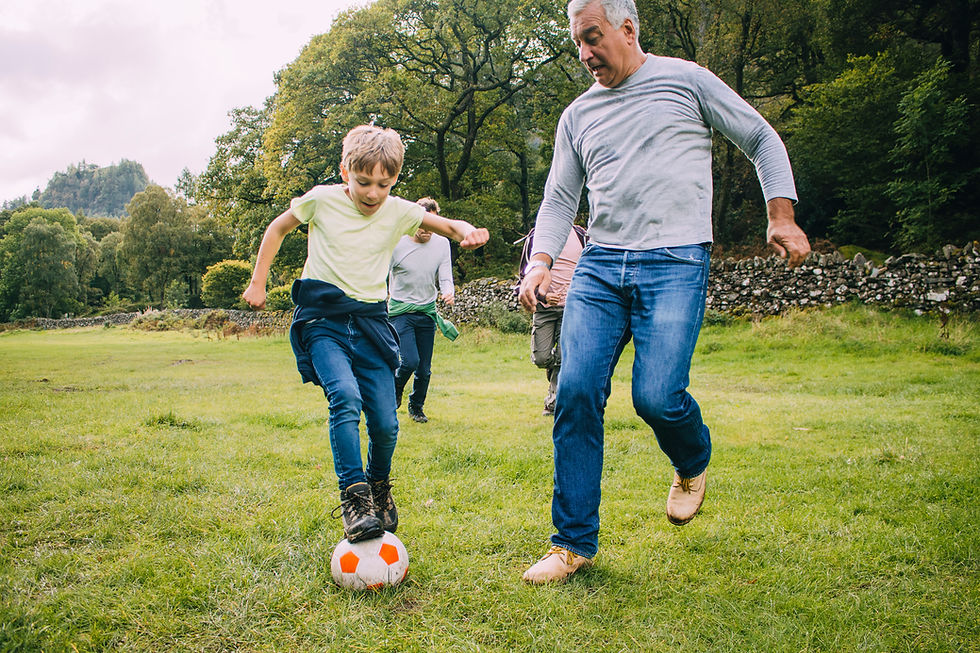
Outdoor play isn’t just good for kids’ bodies—it’s also great for their brains and communication skills. Running, climbing, digging, pretending, and exploring all create real-life opportunities for kids to learn and use language. You don’t need flashcards or worksheets—just your child, the outdoors, and a little bit of intention. Here’s how to turn outside time into rich speech and language practice, without interrupting the fun.
Building Language Skills into Playing Outside
For Toddlers:
Describe what you see - build vocabulary!
Look, it's a dragonfly! It can fly fast.
Use movement to target action words
We are jumping! Let's go climb the ladder!
Work on following directions
Go get the shovel and bring it to me.
Narrate what your child is doing - reducing questions
Instead of asking, what do you want to do next? Narrate what your child is doing - you are jumping high! You can slide fast!
Copy and add - Imitate what your child is saying, then add a small variation to expand their play or language.
"Slide" - "slide fast!" / "go" = "go down!"
For Older Children
Following multi-step directions
Count to five then slide down the slide / Jump 2 times then touch the tree
Target categories and describing
Find 5 things that are green / Do you see anything that is bumpy?
Plan a scavenger hunt
Work on sequencing and planning
Ask open-ended questions
Why do birds build nests? / Where do you think would be a good place for a nest in our yard?
Building Speech Sounds into Playing Outside
Brainstorm words with your child’s target speech sound
Examples:
/k/: kick, count, color, cool, kite, keep, cone
/g/: go, goal, gate, game, good, give
/l/: like, lost, learn, loud, little, lawn, lose
/f/: find, found, feel, feet, four, five
/r/: race, ready, roll, rope, reach, rain, ride

Going to the Grocery Store
Believe it or not, your weekly grocery run is more than just a chore—it’s a great opportunity for language development. With new sights, smells, labels, and interactions, the grocery store offers endless opportunities to support your child’s speech and language skills. You don’t need to plan a lesson! You just need to talk, engage, and involve your child in the experience.
Building Language Skills into the Grocery Store
For Toddlers:
Explore all the vocabulary around you
Look at the strawberries! Let's push the cart.
Give choices
Do you want bananas or blueberries today?
Copy what your child says and add to it
"Milk" - "yes, cold milk!"
Following simple directions
Put the cereal in the cart.
For Older Children
Talk about categories
Are these lemons fruits or vegetables? Can you think of 5 fruits?
Make a shopping list
Before you go, have your child help create a list. Follow the list together.
Compare and describe
How are blueberries and blackberries the same? How are they different?
Practice problem solving
The store is out of chocolate milk. What could we get instead?
What ingredients do you think we need to make tacos tonight?
Practice social language
Have your child practice talking to the cashier while you check out or asking an employee for help to find something
Building Speech Sounds into the Grocery Store
Brainstorm words with your child’s target speech sound
Examples:
/k/: count, carrot, color, corn, cookie, cut
/g/: good, gallon, garlic, go, garden
/l/: like, lollipop, lettuce, lemon, lime
/f/: find, found, feel, food, farm, fish, fig
/r/: ride, race, raspberry, radish, round

Riding in the Car
Car rides can feel like lost time—but for kids, they’re actually full of opportunities to learn and connect. Whether you’re driving five minutes to school or taking a longer trip, the car offers a quiet space where language can naturally bloom—no flashcards, no pressure. Here are some simple activities that fit right into your everyday drive.
Building Language Skills into Car Rides
For Toddlers:
Talk about what you see out the window
I see a big truck! I see a bird flying in the sky!
Use vehicle noises and sing songs
The truck says honk! / Sing the Wheels on the Bus
Play I Spy
I spy something blue. I spy something that says choo choo!
Copy and add to what your child says
"Bus" - "big, yellow bus!"
For Older Children:
Listen to audiobooks or podcasts
Talk about characters, summarize what is happening, ask questions
Play 20 questions
Work on asking questions, problem solving, describing
Talk about directions or spatial concepts
Do we need to turn left or right to get home?
Use license plates and signs for word games
Let's see who can find something that starts with the letter B.
Talk about your child's day
What was something that made you laugh today?
Building Speech Sounds into a Car Ride
Brainstorm words with your child’s target speech sound
Examples:
/k/: car, key, count, color, coins, cow
/g/: go, gas, gallon, game, give, golf
/l/: like, love, light, lake, long, lock
/f/: find, found, feel, far, farm, fan
/r/: ride, race, rain, red, read, radio
Speech and language growth doesn’t have to come from structured lessons or specialized tools—it can happen naturally, right in the middle of your everyday life. Whether you're sharing a snack at the table, winding down for bed, picking up groceries, playing in the backyard, or riding in the car, these ordinary moments are rich with opportunities to support your child’s communication.
If you have concerns about your child's language development and are located in the Tampa Bay area, please contact Bridge Speech Therapy to speak with a Speech Language Pathologist.


Comments